What Actually Makes a Working Line
Aug 22, 2026
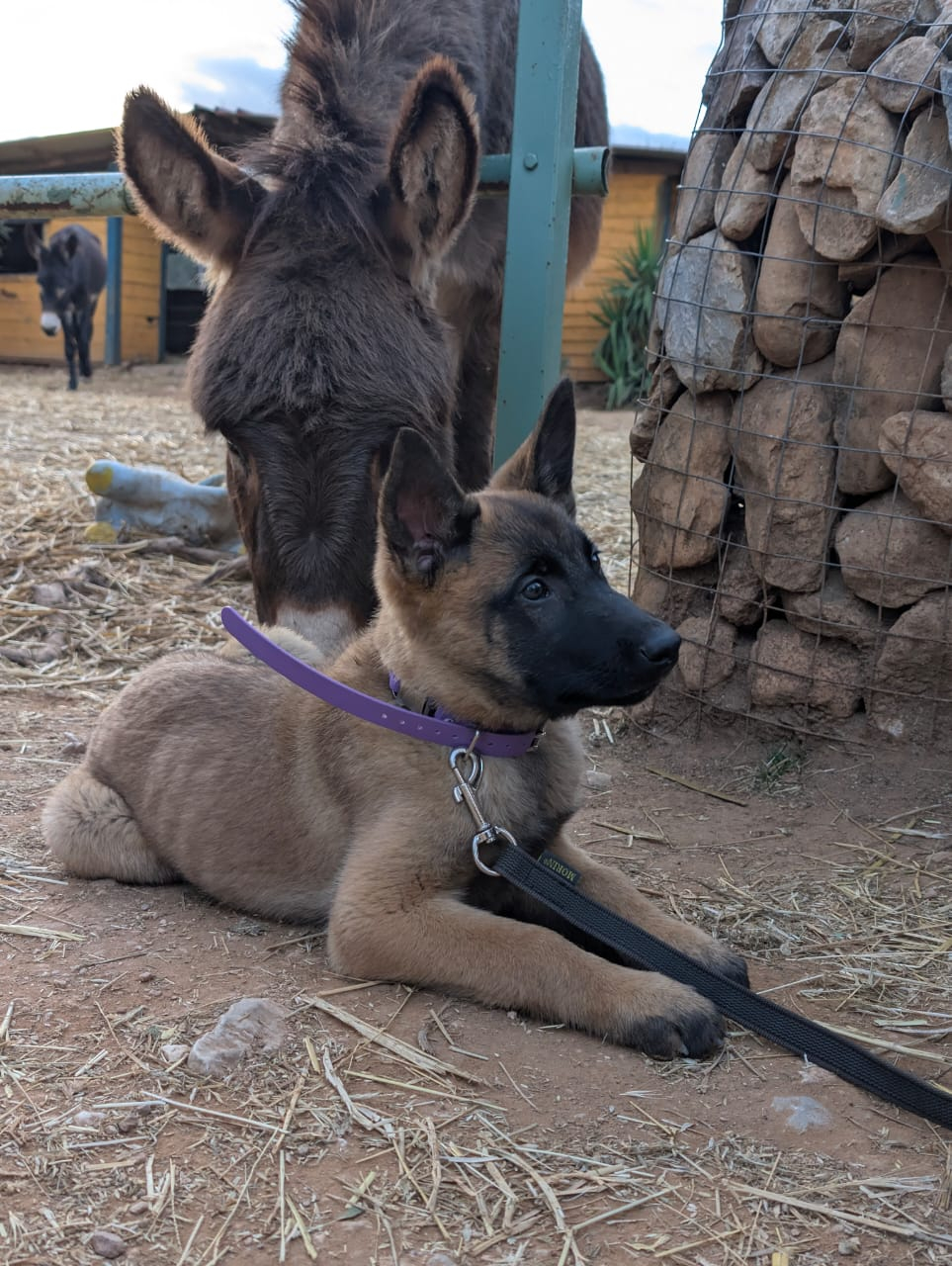
"Working line" gets used as a marketing word almost as often as it gets used correctly. On paper, it usually means a dog descended from lines bred for sport or service work rather than conformation showing. In practice, that label alone tells you less than most buyers assume.
A Sport Title Is Not a Working-Ability Guarantee
A dog with sport titles in its pedigree has proven something — under a specific set of rules, in a specific format, against a specific kind of pressure. That's real information. It's just not the same information as "this dog will hold up under unfamiliar, compound, real-world pressure." Those are different questions, and a title only answers one of them.
I don't discount sport work — it's a legitimate proving ground, and I use elements of it in evaluation. But I treat it as one data point, not the final word. A dog that performs well in a known format has demonstrated drive and trainability. Whether that holds up outside the format is a separate question, and it's the one that actually matters for a protection dog.
Genetics Provide Potential. The Trainer Determines What Becomes of It
Two dogs from nearly identical pedigrees can finish very differently. Timing, handling, when pressure gets introduced, how drive gets shaped — all of it changes the outcome as much as the genetics did. This is why I don't sell a dog on bloodline name alone, and why I'm skeptical of anyone who does. A pedigree is the raw material. It's not the finished product, and it never was.
What I Actually Look For
When I evaluate a breeding prospect or a young dog, working ability, nerve, health, pedigree depth, and complementary traits between sire and dam all matter — but none of them substitute for direct evaluation. I still have to see the dog work. Pedigree tells me what's possible. It doesn't tell me what's there.
That's also why my breeding program stays small. I'm not trying to produce more litters carrying a well-known name. I'm trying to give my training program better raw material to work with — and the only way I trust to confirm that is to evaluate the dog myself, not read about its grandparents.
The Short Version
A working line is a starting point, not a verdict. If someone's entire pitch for a dog is the name on the pedigree, ask what they actually did with it. That's where the real answer lives.